
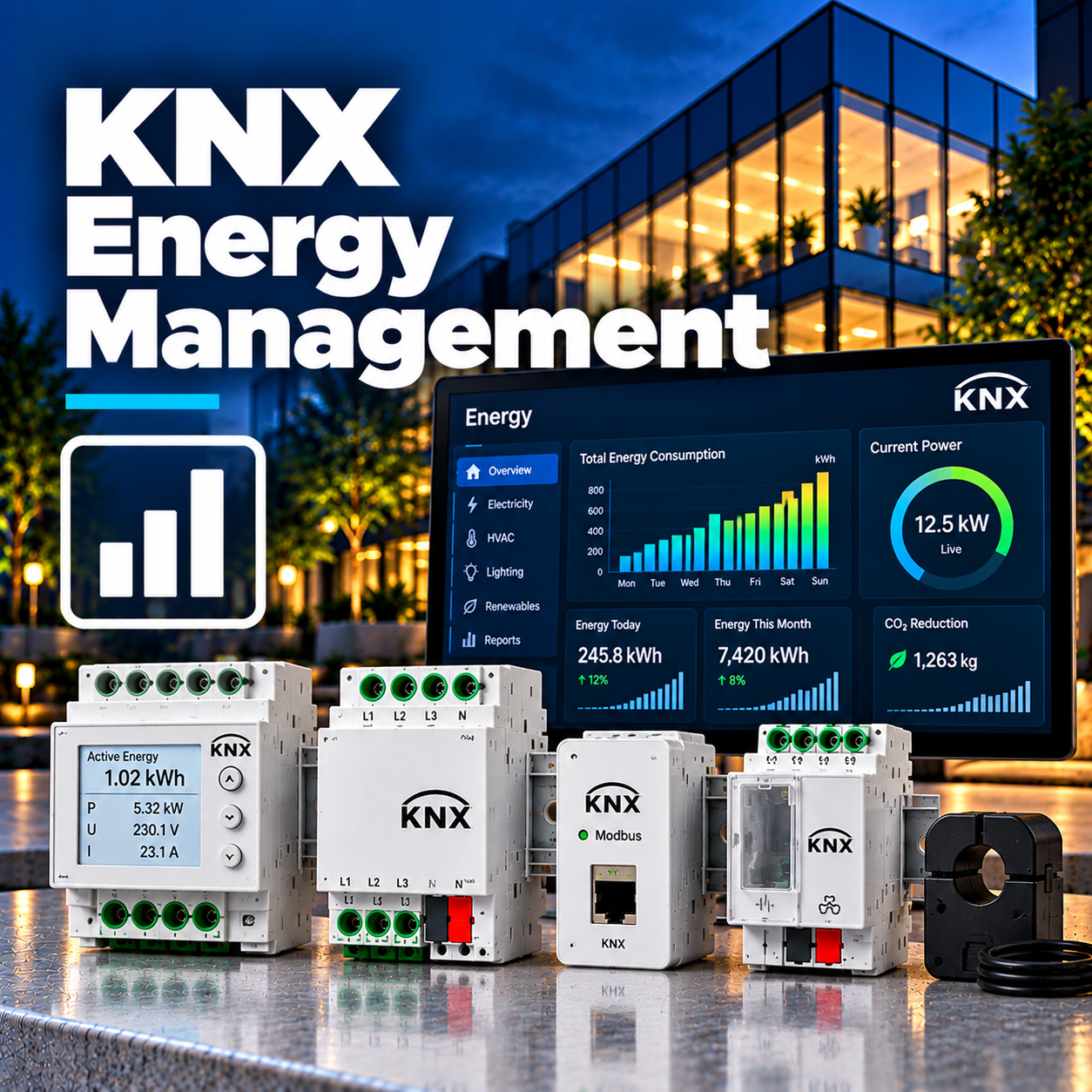
KNX Energy Management

88a6f557-7fc9-4c50-8ba6-8a532d42e7e7.png

Learn — How KNX Energy Management Works

KNX energy management goes beyond simply measuring and displaying energy consumption. It enables building systems to measure, analyze, control, and optimize how energy is used across residential and commercial buildings.

Energy meters, sensors, actuators, gateways, controllers, and visualization systems can work together through KNX to provide real-time information about energy consumption, power demand, voltage, current, operating conditions, and individual building loads.

This information can then become an active part of the building automation strategy. KNX can use measured energy and operational data to support load management, peak-demand control, HVAC optimization, lighting control, automated shading, EV charging coordination, and energy-efficiency strategies.

KNX can also integrate with technologies such as Modbus, DALI/DALI-2, BACnet, HVAC systems, photovoltaic systems, EV charging infrastructure, energy meters, and Building Management Systems (BMS) through appropriate interfaces and gateways.

Measure. Analyze. Control. Optimize.

A KNX-based energy management system can provide a common automation infrastructure connecting lighting, HVAC, motorized shading, energy metering, load management, visualization, renewable-energy systems, and other building functions.

Measure

Electrical energy meters and analyzers can continuously measure parameters such as voltage, current, active power, power factor, demand, and accumulated energy consumption.

Depending on the metering equipment, this information can be communicated directly through KNX or integrated using interfaces such as Modbus RTU/TCP-to-KNX gateways.

Analyze

Energy and operating data can be presented through a central visualization platform, allowing building operators to monitor real-time and historical consumption by system, area, circuit, or individual load.

Consumption trends and operating profiles can help identify abnormal loads, peak-demand periods, unnecessary operating hours, and opportunities for energy reduction.

Control

The real engineering advantage begins when measured information becomes an automation input rather than simply information displayed on a dashboard.

KNX control strategies can coordinate major building systems, including:

  • Lighting control — switching and dimming according to occupancy, schedules, daylight levels, and operational requirements.
  • HVAC optimization — temperature setbacks, occupancy-based operating modes, scheduling, window-contact control, and demand-based heating or cooling.
  • Automated shading — blinds and shades responding to solar position, façade orientation, temperature, and daylight conditions to manage solar heat gain and available natural light.
  • Energy monitoring — collecting, visualizing, logging, and analyzing electrical consumption and operating data.
  • Load management — prioritizing, limiting, delaying, or disconnecting selected loads when predefined demand thresholds are reached.
  • Renewable-energy integration — incorporating photovoltaic production and building-consumption information into the overall energy strategy.
  • Schedules and operating profiles — automatically transitioning building systems between occupied, unoccupied, daytime, nighttime, weekend, and energy-saving modes.

Optimize

Once measurement, analysis, and control are connected, the building can respond to actual operating conditions.

For example, if total electrical demand approaches a predetermined threshold, KNX logic can implement a predefined strategy such as reducing noncritical lighting levels, adjusting HVAC setpoints, postponing discretionary loads, coordinating EV charging, or shedding selected loads.

The objective is not simply to consume less energy at all times. The objective is to use energy intelligently according to building conditions, operational priorities, energy availability, demand limits, and occupant requirements.

From Energy Monitoring to Active Energy Management

Energy monitoring tells you what the building is consuming. Energy management uses that information to influence what the building does.

A properly designed KNX architecture can combine measurement, visualization, automation, and active energy control within a distributed building-control platform.

This provides facility operators with the information and control capabilities needed to improve energy efficiency, manage demand, evaluate building performance, and maintain occupant comfort.

Measure. Analyze. Control. Optimize.


• KNX • DALI • Lighting Controls • HVAC • Shading • Energy Management • Visualization •

All trademarks ®, brand names®, and logos® are the property of their respective owners.